

 USA
 Australia
 Canada
 India
 Malaysia
 UK
 New Zealand
 España
 France
 Indonesia
 Italia
 México
 Deutschland
 中国
 香港
 日本
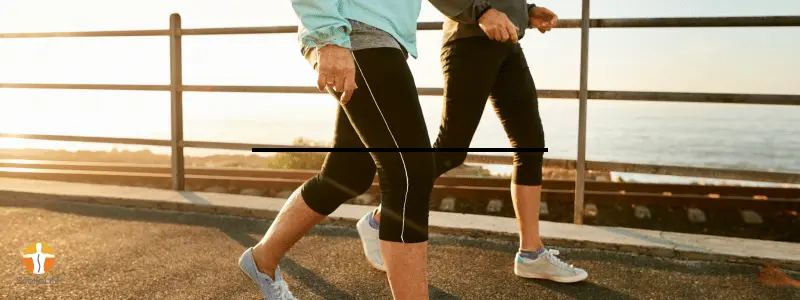
Scoliosis can quietly affect balance, posture and how you walk — not just your Cobb angle. See the overlooked signs and non-surgical support at ScolioLife®.
Most conversations about scoliosis revolve around a single number: the Cobb angle on an X-ray. It is an important measurement, but it describes only the shape of the spine at one moment in time. It says very little about how a person actually functions day to day — how steadily they stand, how evenly they walk, and how confidently they move on stairs or uneven ground.
A growing body of research shows that scoliosis is not only a structural condition but also a sensory and neuromuscular one. For many patients, a curve quietly changes balance and gait long before it causes pain. Understanding this connection is one of the clearest reasons to think about scoliosis as something to actively manage — not simply to watch and wait on.
Scoliosis is more than a line on a scan
When the spine curves and rotates, the body does not stay passive. Muscles on one side work differently from the other, the rib cage rotates, and the position of the head, shoulders and pelvis shifts to keep the eyes level and the body upright. These are intelligent compensations — but they come at a cost. The systems that keep you balanced have to work harder, and they do not always adapt perfectly.
This is why two people with an identical Cobb angle can function very differently. One may feel completely stable; another may notice they tire quickly when standing, feel unsure on stairs, or catch themselves listing to one side. The curve is the same. The functional impact is not.
How a spinal curve affects balance
Balance depends on three streams of information working together: what your eyes see, what your inner-ear (vestibular) system senses about head position, and what your muscles and joints report through proprioception — your body's internal sense of where its parts are in space.
Studies of adolescent idiopathic scoliosis have repeatedly found measurable proprioceptive deficits and greater postural sway compared with peers who do not have a curve. In practical terms, the body's internal map of the spine is slightly less accurate, so it wobbles more when trying to stand still, especially when the eyes are closed or the surface is unstable. Some research also points to differences in how the vestibular system integrates with the other senses. The result is a body that can hold itself up, but often with less margin for error.
None of this means a person with scoliosis is destined to feel unsteady. Balance is trainable. But it does mean balance is worth measuring and supporting, rather than assuming it will look after itself.
The gait connection: how a curve changes the way you walk
Walking is a whole-body event. The spine, pelvis and legs move as one linked chain, so a curve high up can change how the hips and knees behave lower down. Gait analysis in people with scoliosis has shown asymmetries such as unequal hip range of motion between the left and right sides, and compensations that shift load unevenly through the lower limbs — the same chain that can make one leg feel shorter, which we cover in our guide to scoliosis and leg-length discrepancy.
These differences are often invisible to the naked eye on flat ground, where the body has plenty of time to adjust. They tend to show up in more demanding situations — descending stairs, walking on uneven pavement, or moving quickly — where the muscles have less time to compensate. When that compensation runs short, stability drops. This is where the practical consequences of an "asymptomatic" curve start to matter.
Why this matters most at two stages of life
Balance and gait deserve particular attention at two points on the scoliosis journey.
- Growing children and teenagers — during rapid growth, the nervous system is constantly recalibrating to a changing body. A curve that is progressing adds a moving target. Supporting proprioception and symmetrical movement during this window is about building better motor habits while the body is most adaptable.
- Adults, especially later in life — in adult and degenerative scoliosis, an asymmetric gait combined with reduced muscle support is associated in the wider literature with a higher risk of falls. It often travels alongside the postural fatigue many adults with scoliosis notice. For older adults in particular, steadiness on stairs and uneven ground is not a cosmetic concern — it is central to independence and confidence.
What Singapore's school screening does — and does not — capture
Singapore has one of the longest-running school scoliosis screening programmes in the world, in place since 1982. Screening begins around Primary 5 using the Adam's forward bend test, where a nurse or doctor observes the back as the student bends forward and uses a scoliometer to measure trunk rotation. A rotation above roughly five degrees typically triggers a referral to the Health Promotion Board for further assessment, and a confirmed curve in a still-growing child is referred onward for specialist review.
This system is excellent at what it is designed to do: flag curves early so they can be monitored. What it is not designed to assess is function — how the child balances, how symmetrically they walk, or how their body is compensating. A student can pass or "clear" a rotation threshold and still have meaningful movement asymmetries worth addressing. Screening is a starting point for awareness, not a full picture of how the spine is affecting the body.
Where mainstream scoliosis care tends to stop
The conventional pathway for many patients is straightforward: observe a small curve, brace a moderate one during growth, and consider surgery for a large or rapidly progressing curve. Each of these decisions is anchored almost entirely to the Cobb angle.
That focus is understandable, but it leaves a gap. Balance, proprioception and gait are rarely measured, rarely tracked over time, and rarely targeted directly — even though they often shape how a person actually experiences their scoliosis. A curve can be "stable" on paper while the person living with it feels progressively less steady. Addressing the number without addressing the function is one of the things most scoliosis content, and many care pathways, quietly miss.
How ScolioLife® approaches balance and gait
At ScolioLife®, Dr Kevin Lau's non-surgical approach treats the spine as part of a moving, sensing system rather than a static shape to be catalogued. Alongside monitoring the curve itself, a review looks at how the body balances and moves, so that care targets function as well as structure. A typical programme may draw on:
- 3D postural and movement assessment — documenting posture, symmetry and how the body loads each side, giving a repeatable baseline beyond a single Cobb measurement.
- Curve-specific corrective exercise — targeted rehabilitation designed around the individual's curve pattern rather than generic core work, to encourage more symmetrical control. We explain why this matters in curve-specific scoliosis exercises.
- Proprioceptive and balance retraining — deliberately challenging and rebuilding the body's sense of position and steadiness.
- Breathing and postural retraining — addressing the rib-cage and trunk patterns that accompany rotation.
- Bracing where clinically appropriate — including the ScolioAlign® brace, used to support a broader correction programme during growth when indicated.
The clinical goal is a spine that is not only better aligned but better supported and more stable in everyday movement. As with all scoliosis care, individual results vary with age, skeletal maturity, curve type, and how consistently a person engages with their programme. You can read more about the full approach on our scoliosis therapy programme page.
Signs it may be worth having balance and gait assessed
- Feeling unusually unsteady on stairs, kerbs or uneven ground.
- Tiring quickly when standing still, or shifting weight constantly to one side.
- Shoes that wear down unevenly, or a sense of "leaning" that others notice.
- A child who seems clumsy, trips often, or avoids balance-heavy activities.
- An adult with a known curve who has noticed their steadiness slipping over time.
None of these signs confirms a problem on their own — but together they are a reasonable prompt to have both the curve and its functional impact reviewed.
Frequently asked questions
Does scoliosis actually affect balance, or is that just coincidence?
Research in adolescent idiopathic scoliosis has found measurable differences in proprioception and postural sway compared with people without a curve. Balance is not affected in everyone, and the degree varies widely, which is exactly why it is worth assessing individually rather than assuming.
My child passed the school scoliosis screening. Do I still need to think about this?
School screening is designed to flag curves for monitoring, not to assess how a child balances or walks. A child can clear the rotation threshold and still have movement asymmetries. If you notice unsteadiness or frequent tripping, a functional review can be worthwhile.
Can balance and gait be improved without surgery?
Balance and movement are trainable. Non-surgical care can include curve-specific exercise and proprioceptive retraining designed to support steadiness and more symmetrical movement. Outcomes depend on the individual, and results vary from person to person.
I am an adult with scoliosis and feel less steady than I used to. Is that normal?
Changes in steadiness are worth taking seriously rather than accepting as inevitable. In adults, asymmetric gait with reduced muscle support is linked in the wider literature to greater fall risk, so having both the curve and your balance reviewed is a sensible step.
How do you measure balance and gait at ScolioLife®?
An assessment documents posture, symmetry and movement to create a repeatable baseline, so changes can be monitored over time alongside the curve itself. This helps target care to function, not just to the shape of the spine.
Take the next step
Book a consultation with ScolioLife® to have your balance and gait assessed alongside your curve, and learn more about our scoliosis therapy programme.
More articles

Does Scoliosis Make You Shorter? How Much Height a Curve Costs, and What Can Be Regained
November 3, 2026
Is Swimming Good for Scoliosis? What the Research Shows, and What the Pool Can and Cannot Do
October 26, 2026
Scoliosis X-Rays and Radiation: How Many Does Your Child Really Need, and How to Keep the Count Low
October 26, 2026